
Drain flies—those tiny, fuzzy moth-like insects hovering around your sinks and drains—are a common household nuisance. While they don’t bite or transmit diseases, their persistent presence can be frustrating and indicates organic buildup in your plumbing. These pests, also known as sewer gnats or moth flies, thrive in the moist, organic matter that accumulates inside drains and pipes. To permanently eliminate them, you must remove their breeding ground rather than just targeting the adult flies you see.
Find the Breeding Source
Before you can effectively tackle a drain fly infestation, you need to locate exactly where they’re breeding. Since drain flies are weak flyers, they typically stay close to their source.
Identify Problem Drains
One effective method to identify problem drains is the tape test:
- Cover your drain openings with clear tape overnight (sticky side down, with a few small holes for air)
- Check the tape in the morning—if flies are stuck to it, you’ve found a breeding site
- Pay special attention to seldom-used drains like basement floor drains or guest bathrooms
- Any drain with a noticeable odor is likely harboring organic buildup that attracts drain flies
Check Other Areas
While drains are the most common breeding sites, drain flies can sometimes develop in other locations:
- The P-trap of rarely used toilets
- Overflow holes in sinks and bathtubs
- Condensate pans under refrigerators or air conditioners
- Around leaky pipes or in areas with standing water
- Mop buckets or cleaning tools that remain wet
Thoroughly inspecting these areas will help ensure you address all potential breeding sites.
Clean the Drains
Once you’ve identified where drain flies are breeding, thorough cleaning is essential to eliminate them.
Boiling Water Flush
A simple first step is flushing drains with boiling water:
- Carefully pour a full kettle of boiling water down the affected drain
- Repeat this process morning and night for several days
- This helps loosen some organic buildup and kill larvae near the surface
However, it’s important to note that this method alone may not be sufficient for established infestations. Contrary to popular belief, simply pouring boiling water or bleach down a drain provides only temporary relief as it doesn’t completely remove the organic film where flies breed.
Baking Soda + Vinegar
This natural cleaning method helps break down organic matter:
- Pour half a cup of salt and half a cup of baking soda into the drain
- Follow with one cup of white vinegar
- The mixture will foam vigorously—let it sit overnight with the drain plugged if possible
- In the morning, flush thoroughly with hot water
This combination helps dissolve buildup without harsh chemicals.
Scrub the Pipe
Physical cleaning is crucial for removing the slimy biofilm where drain flies lay their eggs:
- Use a stiff drain brush, pipe brush, or plumbing snake with a brush attachment
- Insert the brush several inches into the drain, making sure to reach the sides of the pipe
- Pay particular attention to the area just below the drain opening and the P-trap
- Scrub thoroughly to dislodge as much slime and debris as possible
This mechanical cleaning is often the most effective step in eliminating drain flies.
Enzyme Cleaner
After mechanical cleaning, an enzyme-based drain cleaner can help eliminate remaining organic matter:
- Choose products specifically marketed for drain fly control or organic buildup
- Follow the product directions carefully—typically applied nightly for a week
- Enzyme cleaners contain beneficial bacteria that digest organic waste
- Unlike chemical drain cleaners, these are safe for pipes and environmentally friendly
Products like Drain Clean Liquid Enzyme Drain Cleaner or Bio Activ Drain Cleaner are specifically designed to remove the biofilm that drain flies need to survive.
Kill Adult Flies
While addressing the breeding sites is most important, you may also want to reduce the adult fly population for immediate relief.
Traps for Adults
Simple homemade traps can help catch adult drain flies:
- Fill a small bowl with apple cider vinegar and add a drop of dish soap
- Place the bowl near affected drains
- The vinegar attracts the flies, while the soap breaks the surface tension, causing them to drown
- Alternatively, place sticky fly traps near infested areas to catch adults
These traps provide a chemical-free way to reduce the adult population while you address the source.
Aerosol Insecticide (Optional)
If the adult fly population is overwhelming:
- You can use a flying insect spray to quickly reduce their numbers
- Always follow product instructions and keep sprays away from food, dishes, and personal items
- Remember that insecticides only target adult flies and won’t solve the underlying issue
- Use these products sparingly and in well-ventilated areas
Preventing Return
Once you’ve eliminated drain flies, preventive maintenance is key to keeping them from coming back.
Keep Drains Clean
Regular maintenance prevents new organic buildup:
- Use enzyme cleaners weekly or monthly, especially in frequently used drains
- Flush drains with hot water regularly to prevent accumulation of debris
- Clean drain stoppers and strainers frequently to remove hair and food particles
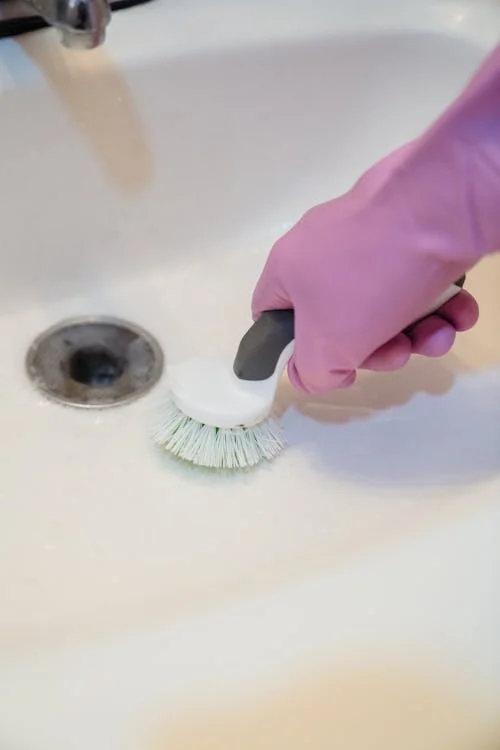
Drains are often overlooked in regular cleaning routines, but quarterly maintenance can prevent many issues.
Fix Plumbing Issues
Address moisture problems that could attract drain flies:
- Repair leaky faucets and pipes promptly
- Ensure areas under sinks stay dry
- Check for and fix any standing water issues
- Inspect and clean condensate pans and air conditioner drip lines
Eliminating excess moisture removes potential breeding sites.
Cover Unused Drains
For drains that aren’t regularly used:
- Run water periodically to keep P-traps filled
- Consider covering rarely used drains when not in use
- Apply a thin layer of mineral oil to the water surface in seldom-used drains to create a barrier that prevents flies from emerging or laying eggs
Garbage Disposal
If you have a garbage disposal in your kitchen:
- Grind ice cubes and lemon peels occasionally to scour the interior
- Use a garbage disposal cleaner regularly
- Run cold water before, during, and after use to flush food particles through the system
When to Call a Pro
Despite your best efforts, some drain fly infestations may require professional assistance:
- If flies persist after two weeks of diligent cleaning
- If you suspect broken pipes or hidden moisture sources
- When drains continually clog despite cleaning
- If there’s a sewage smell accompanying the flies
A professional plumber can use specialized equipment like drain cameras to inspect deep into your plumbing system and identify issues you can’t see.
Conclusion
Eliminating drain flies permanently requires addressing their breeding grounds and breaking their life cycle. By thoroughly cleaning affected drains, killing adult flies, and implementing preventive measures, you can successfully rid your home of these persistent pests. Remember that consistency is key—a one-time cleaning rarely solves the problem completely. With regular maintenance and proper prevention, you can keep drain flies from returning and enjoy pest-free drains.
Most infestations can be resolved within one to two weeks of consistent treatment. The key is thorough cleaning to remove all organic material where drain flies breed. By combining physical cleaning with enzymatic treatments and preventive maintenance, you’ll create an environment where drain flies can’t thrive, giving you a permanent solution to this common household problem.


