
The landscape of government contracting is undergoing a revolutionary transformation, powered by artificial intelligence technologies that are reshaping how businesses find, bid on, and win government contracts. As federal agencies embrace AI solutions to streamline procurement processes, contractors need to adapt and leverage these same technologies to remain competitive in the government marketplace.
The Challenge of Government Contract Bidding
Government contracting has traditionally been plagued by inefficiency and complexity. Federal, state, and local procurement systems like SAM.gov are notoriously difficult to navigate, particularly for small businesses without dedicated contracting staff. The current systems often rely on basic keyword searches that deliver irrelevant results, forcing contractors to spend countless hours searching for appropriate opportunities.
Traditional methods of finding contracts are not only time-consuming but also risk missing relevant opportunities buried within lengthy solicitation documents. Many businesses struggle with the cumbersome interfaces of government procurement portals, creating significant barriers to entry for newcomers to government contracting.
AI-Powered Solutions Transforming Government Contracting
Artificial intelligence is revolutionizing government contracting by automating repetitive tasks, improving data analysis capabilities, and enhancing decision-making processes. These technologies are providing significant advantages to contractors who adopt them early.
AI-Powered Contract Search and Discovery
Modern AI tools are transforming how businesses discover government contracts through:
- Semantic search capabilities that understand the meaning and context behind search queries, not just keywords
- Document analysis that evaluates entire solicitation packages rather than just brief descriptions
- Pattern recognition that identifies opportunities matching a company’s capabilities even when the terminology differs
Leading the Change: Sweetspot
Sweetspot has emerged as a frontrunner in AI-powered government contract search technology. This innovative platform was developed by founders Sachin and Philip, who recognized the difficulties businesses face when trying to navigate government procurement websites.
Sweetspot leverages advanced AI to:
- Process and analyze over 20 billion tokens from contract documents
- Perform deep semantic analysis rather than simple keyword matching
- Generate detailed, content-rich descriptions based on the actual files associated with opportunities
- Cover not just federal contracts but also over 200,000 state, local, and education (SLED) contracts spanning 17,000+ agencies across 47 states
The platform specifically addresses the problem of vague or incomplete opportunity descriptions that plague traditional contract search systems. By analyzing the actual documentation, Sweetspot can surface relevant opportunities that would be impossible to find through conventional keyword searches.
Benefits of Using AI for Government Contract Bidding
Government contractors leveraging AI technologies can realize numerous advantages throughout the procurement lifecycle:
1. Enhanced Opportunity Discovery
AI systems dramatically improve a contractor’s ability to identify relevant opportunities by:
- Analyzing vast amounts of data across numerous government portals simultaneously
- Highlighting opportunities that match a company’s capabilities and past performance
- Providing insights into emerging market trends and agency purchasing patterns
2. Automated Workflow Processes
AI can streamline tedious administrative tasks that consume valuable time and resources:
- Automating data extraction from complex government documents
- Streamlining vendor selection processes
- Facilitating contract drafting and compliance checks
- Organizing contractor questions into categories for efficient responses
3. Improved Decision-Making
Contractors can make more informed decisions about which opportunities to pursue through:
- AI-powered analysis of historical data and market trends
- Predictive analytics to forecast project risks and resource requirements
- Simulation capabilities to evaluate potential outcomes of different bidding strategies
4. Risk Mitigation
AI helps contractors identify and address potential risks before they become problems:
- Detecting patterns that may indicate compliance issues or performance challenges
- Monitoring financial transactions and project timelines for anomalies
- Forecasting future risks based on historical data and market trends
5. Proposal Development Assistance
Some AI platforms specifically assist with creating winning proposals by:
- Analyzing RFP requirements to ensure compliance
- Generating tailored proposal content based on company capabilities
- Creating detailed cost proposals and pricing estimates
Navigating the Regulatory Landscape
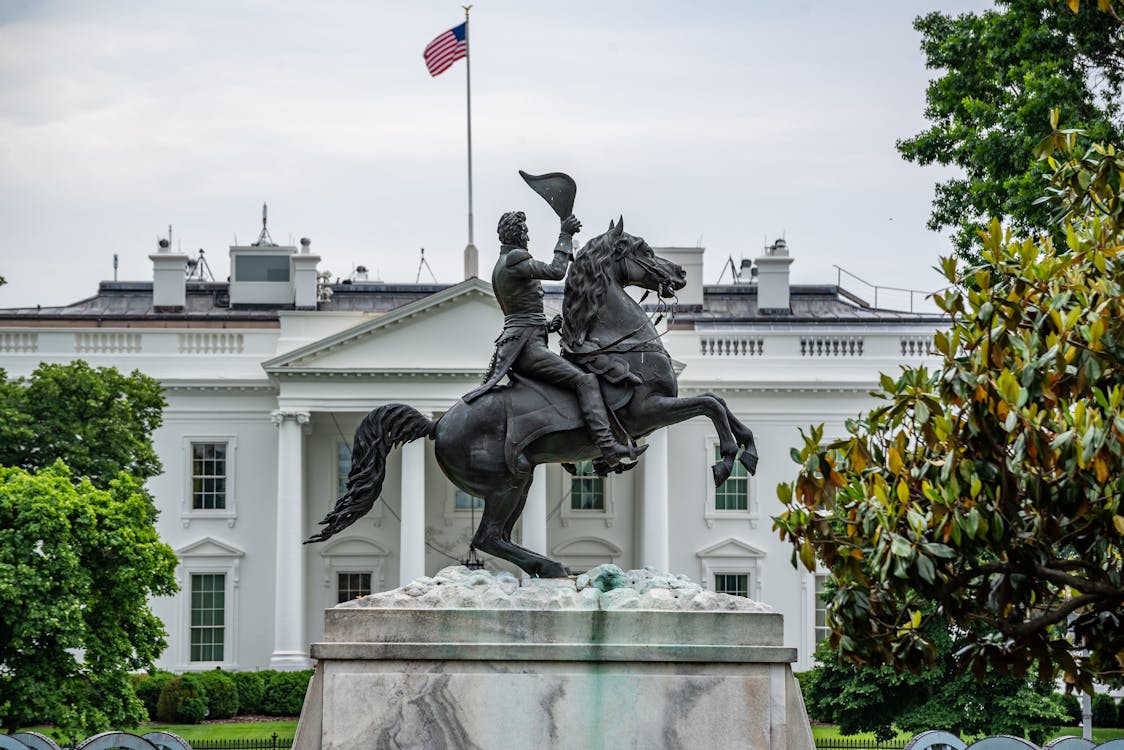
The White House has recently established new requirements for government procurement of AI technologies, indicating the strategic importance of AI in federal operations:
White House Initiatives
In September 2024, the Office of Management and Budget (OMB) released Memorandum M-24-18, which directs how federal agencies will procure artificial intelligence technologies. This memorandum builds on previous guidance implementing President Biden’s October 2023 Executive Order on AI.
Key aspects of these requirements include:
- Risk measures for enterprise-wide generative AI systems
- Acquisition practices that reduce vendor lock-in
- Emphasis on interoperability and transparency
- Increased scrutiny for AI-enabled systems sold to government agencies
For contractors offering AI solutions to government agencies, these regulations present both challenges and opportunities. They will need to demonstrate compliance with these requirements while showcasing the unique benefits of their AI technologies.
Implementation Considerations for Contractors
When adopting AI for government contracting, businesses should consider several critical factors:
Security and Privacy
Government contractors must prioritize robust security measures when implementing AI systems:
- Ensuring encryption and advanced access controls to protect sensitive data
- Implementing data anonymization techniques
- Maintaining compliance with federal privacy regulations
Addressing Bias and Discrimination
AI systems can inadvertently perpetuate biases if not properly designed:
- Implementing transparent and auditable AI models
- Conducting bias assessments before deployment
- Diversifying training data sources to prevent discriminatory outcomes
Workforce Requirements
Successful AI implementation requires appropriate staff training:
- Investing in workforce development programs
- Documenting processes thoroughly
- Promoting cross-team collaboration to bridge skill gaps
Future Trends in AI for Government Contracting
The integration of AI into government contracting continues to evolve rapidly:
- Increased automation of procurement processes from opportunity identification through contract management
- Enhanced interoperability requirements to ensure AI systems work within existing government frameworks
- Greater emphasis on transparency in AI-driven decision-making processes
- Expanded use of predictive analytics for forecasting contract performance and outcomes
Government agencies are already using AI for spend analysis, contract management, and fraud detection, indicating that contractors who fail to adopt these technologies may find themselves at a competitive disadvantage.
Conclusion: Embracing AI for Contracting Success
The future of government contracting clearly belongs to those who effectively leverage AI technologies. Tools like Sweetspot are transforming what was once a frustrating, time-consuming process into a streamlined, efficient operation that opens government contracting opportunities to businesses of all sizes.
As the federal government continues to implement policies encouraging AI adoption, contractors who embrace these technologies will gain significant advantages in finding, bidding on, and winning government contracts. The strategic integration of AI into contracting workflows is no longer optional but essential for businesses seeking to thrive in the government marketplace.
By adopting platforms like Sweetspot that specifically address the challenges of government contract discovery and bidding, businesses can dramatically improve their success rates while reducing the administrative burden traditionally associated with government contracting.
Frequently Asked Questions
1. How does AI help in finding government contracts?
AI tools like Sweetspot use advanced semantic search and document analysis to identify relevant contracts more effectively than traditional keyword searches. These tools analyze entire solicitation documents, uncovering opportunities that might otherwise be missed.
2. Can AI assist with writing proposals?
Yes! AI-powered platforms can analyze RFP requirements, generate tailored proposal content, and even create compliance matrices. This streamlines the proposal-writing process and ensures alignment with contract requirements.
3. What are the main benefits of using AI in government contracting?
- Efficiency: Automates repetitive tasks like document analysis and compliance checks.
- Accuracy: Reduces errors in proposals and ensures regulatory compliance.
- Opportunity Discovery: Identifies contracts that match your capabilities.
- Risk Mitigation: Detects potential compliance or performance risks early.
4. Are there any regulatory considerations for using AI in contracting?
The U.S. Office of Management and Budget (OMB) has issued guidelines for federal agencies procuring AI technologies, emphasizing transparency, interoperability, and risk management. Contractors should ensure their AI systems comply with these requirements.
5. Is AI suitable for small businesses in government contracting?
Absolutely! Small businesses can benefit from AI tools by automating time-consuming tasks and identifying set-aside opportunities specifically designed for them. Platforms like Sweetspot are particularly helpful for small businesses navigating complex procurement systems.
6. What challenges should contractors expect when implementing AI?
The main challenges include ensuring data security, addressing bias in algorithms, integrating AI with existing systems, and maintaining transparency in decision-making processes.
7. What is the future of AI in government contracting?
The future includes increased automation of procurement processes, greater use of predictive analytics for forecasting project outcomes, and enhanced transparency in decision-making. Contractors who adopt these technologies will gain a competitive edge (source).
If you have additional questions about using AI in government contracting or want to explore tools like Sweetspot further, feel free to join the discussion in the comments!


